RSS

Tag Archives: Brasil

Image

Φωτό: José Medeiros

Φωτό: José Medeiros

Critical Commentary (3)

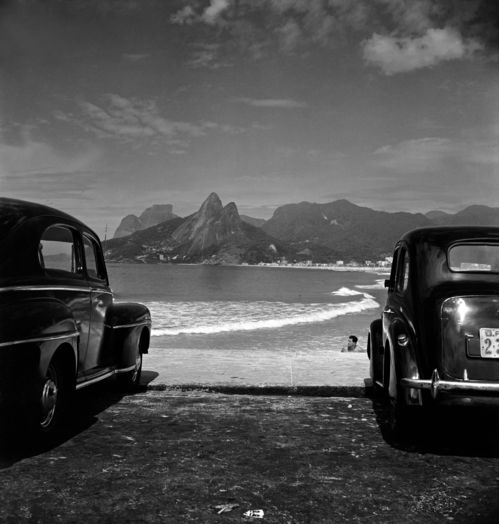
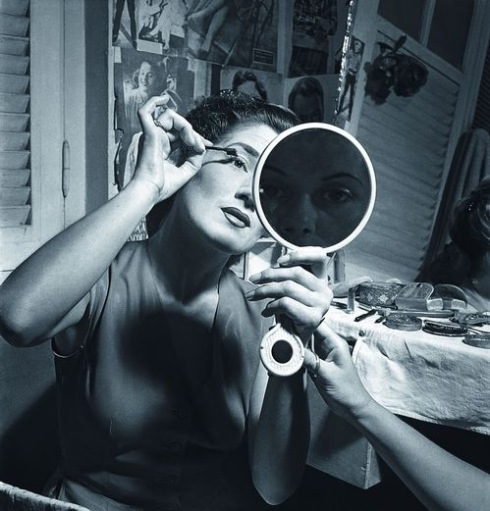
As the Hungarian photographer Robert Capa (1913-1954) used to say, if a picture is not satisfactory enough, it is because the photographer was not close enough to the subject. Medeiros’ photographs seem to have been made according to this maxim, showing he was not a spectator distanced from the subjects he recorded. He chose the side of discretion, thus managing to include himself in the scenes to capture the subjects at ease, often at intimate moments. He was one of the first reporters of O Cruzeiro to adopt the German 35mm camera Leica, which allowed him greater mobility to work and rendered his pictures spontaneity.

Medeiros placed emphasis on clearly conveying the information over the formal exploration of compositional elements (angle shots or images bordering on abstractions, for example). He nearly always preferred natural light and eye-level framing, trying to render his images a sense of immediacy. He turned his attention to people, whether famous or anonymous figures of the streets. He focused on their gestures, expressions and movements, seldom trying to record them beside objects or amid surroundings which might reveal their personalities.

Like the German photographer Erich Salomon (1986-1944), who became known in the 1920s as one of the first to portray statesmen in non posed, informal situations, Medeiros also attempted to demystify public personalities, as in the series of photographs made in 1959 showing president Juscelino Kubitschek (1902-1976) eating a mango fruit during a lunch in Brasília.
 

Tags: ,

Image

Φωτό: José Medeiros

Φωτό: José Medeiros

Critical Commentary (2)

The reporters of the magazine joined the Villas-Boas brothers in the Roncador-Xingu Expedition, which, in the 1940s and 1950s, was the first ever to contact several Indian tribes of Northwestern Brazil. The photo-essays of O Cruzeiro showed firsthand images of the Brazilian Indians to a wide public. Nevertheless, these peoples were shown as barbarian and uncivilized, and their images as incompatible with the ideology of progress.2 One of Medeiros’ most well-known photographs, taken while he accompanied the Villas-Boas brothers in 1949, shows an Indian man pushing an airplane. The posed photo became emblematic of the contrast between the “modern” and the “savage”.

Like other photojournalists of O Cruzeiro, José Medeiros became a very popular figure working for the magazine. The publication, which had a far-reaching circulation and impact, advanced the notion of the photographer as a hero who faced all sorts of dangers to show aspects of the country which until then had been unknown to the public.


Tags: ,

Image

Φωτό: José Medeiros

Φωτό: José Medeiros

Critical Commentary (1)

José Medeiros was one of the staff photographers led by Jean Manzon (1915-1990) who participated in the editorial renovation of the magazine O Cruzeiro [The Crux], beginning in 1943. Based on the model of international magazines such as the American Life and the French Paris Match, the project introduced photojournalism in the Brazilian press. Pictures were given special emphasis and the renovation contributed to disseminate the aesthetics of modern photography in Brazil: close-ups, unusual angles, picture spreads, geometric frames etc.

O Cruzeiro mainly focused on subjects relevant to the nationalist ideology, conveying an image of Brazil as a country bound for progress and modernity. According to the researcher Helouise Costa, the most recurring subjects were profiles of political and artistic personalities, sports and recreation scenes (beach, soccer and carnival), art, science, nature, adventure, the city as a symbol of progress, the “grotesque” (physical deformations and sensational crimes), the “exotic” (indigenous people, non-Catholic religions and popular celebrations) and the cultural diversity of the country itself.1
Within this context, Medeiros’ work was diversified and partially followed the editorial line of the magazine.

He photographed artists and prominent politicians of the time, Rio de Janeiro’s beach life and carnival, becoming well-known mainly for registering people, communities and cultural manifestations of marginalized groups, like the black people, candomblé, mental patients, prostitutes and Indian tribes. Medeiros’ approach rendered the destitute dignity, when viewed apart from the editorial treatment given to photographs in the magazine


Tags: ,

Image

Φωτό: José Medeiros

Φωτό: José Medeiros

Biography


José Araújo de Medeiros (Teresina PI 1921 – L’Aquila, Itália, 1990). Photographer. He took up photography as an amateur around 1937, in his hometown. In 1939, he moved with his family to Rio de Janeiro, where he worked as a civil servant for the Post and Telegraph Company and the National Department of Coffee. In this period, he portrayed artists in a makeshift home studio and worked as a free-lance photographer for the magazines Tabu [Taboo] and Rio. In 1946, the French photographer Jean Manzon (1915-1990) invited him to join the staff of the magazine O Cruzeiro [The Crux], where he worked until 1962. In 1957, he published the book Candomblé, the first to document in pictures this Afro-Brazilian religion. Together with Flávio Damm (1928), he ran the photo agency Imagem [Image], from 1962 to 1965. Afterwards, he began working as a cinematographer, as well as directing short-films and the feature Parceiros da Aventura [Partners in adventure], 1979. He photographed some classics of Brazilian cinema, like A Falecida [The dead woman], 1965, of Leon Hirszman (1937-1987); Xica da Silva, 1976, of Cacá Diegues (1940); and Memórias do Cárcere [Memories of prison], 1983, of Nelson Pereira dos Santos (1928). In the late 1980s, he taught photography at the International School of Cinema of San Antonio de Los Baños, in Habana, Cuba. In 1986, the Fundação Nacional de Arte (Funarte) [National Art Foundation] held the retrospective exhibition José Medeiros, 50 Anos de Fotografia [José Medeiros, 50 years of photography], in Rio de Janeiro, and published a book on his work by the same title.


Tags: ,